

How to calm anxiety: A simple practice that helps you feel more grounded
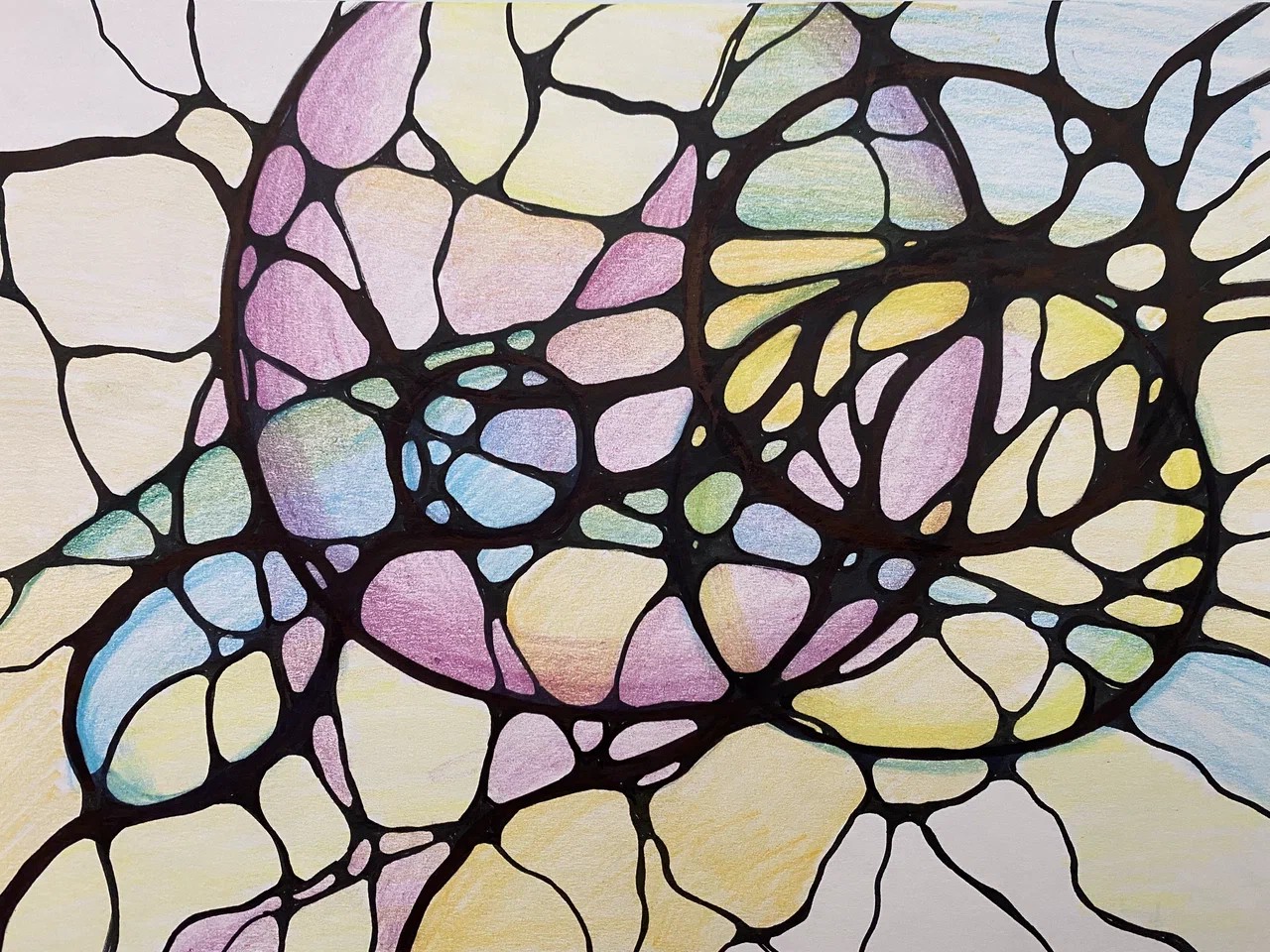
A Mindful Line neurographics drawing
Feeling anxious doesn't always mean something is wrong.
Sometimes anxiety appears before a difficult conversation. Sometimes it arrives for no obvious reason. Your thoughts speed up, your body feels tense, and even simple decisions become harder.
If you've ever wondered how to calm anxiety naturally, you're not alone.
While anxiety has many possible causes, there are practical ways to help your nervous system settle. One of them is neurographics, a structured drawing practice that combines mindfulness, focused attention, and creative movement.
Many people describe feeling calmer and more emotionally balanced after just one session.
What is anxiety?
Anxiety is your body's way of preparing for a possible threat.
Your brain is constantly scanning for danger. When it believes something could go wrong, it activates your stress response, even if the danger isn't happening right now.
This can lead to symptoms like:
Occasional anxiety is a normal part of life. But when your mind stays stuck in cycles of worry, it becomes difficult to relax and think clearly.
Why anxiety can feel impossible to stop
One challenging aspect of anxiety is that it feeds itself. A worrying thought creates physical tension. That tension makes your brain believe the threat is real. The brain then generates even more anxious thoughts. The cycle repeats.
Trying to "just stop thinking about it" often makes the thoughts stronger.
Instead of fighting anxiety, it can help to gently shift your attention into a different type of activity that engages both your body and your mind.
How neurographics can help calm anxiety
Neurographics is a structured drawing method that helps transform emotional and mental patterns and form new neural pathways through guided visual practice.
Instead of trying to suppress anxious thoughts, you work with them through drawing.
You begin by expressing the emotional tension on paper. Then, through a series of structured drawing steps, the image gradually transforms into something more balanced and harmonious.
This process combines several elements known to support emotional regulation:
Many Mindful Line students say they notice a sense of calm, emotional relief, or greater clarity even after a single drawing session.
With regular practice, many also report becoming less reactive to stressful situations and finding it easier to shift out of anxious thinking patterns.
As we explain in our article about How to Stop Overthinking, creating new mindful drawing patterns may help the brain move away from repetitive mental loops and build new ways of responding over time.
A simple neurographics practice for anxiety
You don't need artistic skills.
You only need:
Step 1: Choose Your Feeling
Instead of trying to solve everything at once, focus on one feeling.
For example:
Step 2: Release the Emotion
For several seconds, move your hand freely across the page without thinking about how it looks.
Allow the movement to express the anxiety itself.
Move quickly.
Don't try to control the lines.
Simply let the feeling come onto the paper until it naturally feels complete.
Step 3: Round Every Sharp Corner
Wherever lines cross or create sharp angles, round them into smooth curves.
This is one of the core principles of neurographics.
As you round each intersection, breathe slowly and keep your attention on the drawing.
Step 4: Add Mindful Lines
Continue adding new neurographic lines across the page.
The goal is to gradually integrate the original scribble into the overall drawing until it no longer stands out.
Instead of seeing the original "burst" of anxiety, your eye begins to perceive one connected composition.
Round every new intersection that appears.
Step 5: Add Color
Choose colors intuitively.
Color at least two neighboring sections with the same color, or connect several nearby areas into one larger color field.
Avoid leaving isolated colored shapes.
The drawing should gradually feel more connected, balanced, and unified.
Step 6: Find the Visual Solution
Look at your drawing.
Notice whether one shape naturally stands out.
It might be a circle, an organic form, or another figure that feels complete.
Emphasize this shape using your marker so it becomes the first thing your eye notices.
In neurographics, this visual solution symbolically represents your brain finding a new direction, even if you cannot yet explain it with words.
Step 7: Pause and Reflect
When the drawing feels complete, ask yourself:
Does neurographics really help anxiety?
Neurographics is not a medical treatment for anxiety disorders, and it should not replace professional mental health care when needed.
However, many people use it as a self-regulation practice that helps them:
At Mindful Line, more than one million students across over 100 countries have explored neurographics as a way to reduce stress, process emotions, and support personal growth.
You can start with a beginner-friendly session, explore a foundational course like Neurographics Essentials, or join the Mindful Line Club for regular guided drawing practice.
Frequently asked questions

Can neurographics stop anxiety immediately?
Many people report feeling calmer after one drawing session. Regular practice often brings more consistent benefits.
Do I need drawing experience?
No. Neurographics was designed for beginners. The goal is not to create beautiful art but to work with emotions and mental patterns through a structured drawing process. If you're new to the method, see How to Draw Neurographics Step by Step for a complete beginner's guide.
Why can drawing help reduce anxiety?
Neurographics combines focused attention, repetitive hand movements, and structured visual processing. Rather than trying to suppress anxious thoughts, it helps you work with them through drawing. To learn more about how the method works, read What Is Neurographics and How Does It Work?
Is neurographics the same as art therapy?
Not exactly. Neurographics can be considered a form of creative therapeutic practice, but unlike traditional art therapy, it follows a structured algorithm designed to help transform emotional and mental patterns through guided drawing. Learn more in Neurographics vs. Art Therapy: What's the Difference?
Can neurographics help with overthinking as well as anxiety?
Yes. Anxiety and overthinking often reinforce each other. Many people find that neurographics helps interrupt repetitive thought loops while also reducing emotional tension. Learn more in How to Stop Overthinking With Neurographics.
Where can I practice neurographics?
If you'd like ongoing guidance, the Mindful Line Club offers weekly guided neurographics sessions led by experienced instructors. It's designed for people who want to build a consistent practice and continue supporting their emotional well-being over time.
Privacy Policy | Terms And Conditions | Neuroart Limited