

How to stop overthinking: A creative approach with neurographics
Overthinking can feel like your mind is trying to solve the same problem over and over again but never reaches a real resolution.
You may replay a conversation, worry about a decision, imagine everything that could go wrong, or keep returning to the same emotional situation even when you are tired of thinking about it.
Neurographics offers a different way to work with overthinking. Instead of trying to force the mind to become quiet, it uses structured drawing to help shift attention, process emotions visually, and support the formation of new neural pathways through guided creative practice.
Why Do We Overthink?
Overthinking often happens when the brain is trying to protect us, solve a problem, or make sense of an unresolved emotional experience.
When something feels uncertain, painful, or important, the mind may keep returning to it in an attempt to find control or clarity. But instead of helping, repeated thinking can create a loop.
You may notice this as:
The more often the brain follows the same thought pattern, the more familiar that mental pathway becomes. Over time, overthinking can turn into an automatic response.
Why Thinking Alone Often Does Not Help
Many people try to solve overthinking by thinking harder.
They analyze the situation, journal about it, talk it through, make lists, or search for advice. Sometimes this helps. But when emotions are intense, the mind can get stuck repeating the same story instead of processing what is underneath it.
This is why overthinking often feels exhausting. The mind is working, but the emotional charge remains.
You may understand what is happening intellectually and still feel tense, worried, or unable to move forward.
In these moments, a different kind of processing can help — one that does not rely only on words.
Why Meditation Can Feel Difficult When Your Mind Is Racing
Meditation is often recommended for overthinking, but it can feel difficult when the mind is already overwhelmed.
When thoughts are racing, sitting still and focusing on the breath may feel frustrating. Some people become even more aware of how busy their mind is, which can make them feel like they are “bad at meditation.”
This does not mean meditation is wrong. It simply means that during emotional overload, some people need a more active and physical way to calm the mind.
Creative practices like neurographics can be helpful because they give the mind something gentle to do.
The hand moves. The eyes follow lines. The attention shifts from repetitive thinking to visual processing. Instead of forcing stillness, the body and brain gradually move toward it.
How Neurographics Can Help With Overthinking
Neurographics is a structured drawing method that helps transform emotional and mental patterns and form new neural pathways through guided visual practice.
It combines simple lines, shapes, rounded intersections, and focused attention. The goal is not to create beautiful art. The goal is to give thoughts and emotions a visual form so they can be worked with in a different way.
When you draw neurographic lines, you begin to move the experience out of your head and onto paper. This can make an emotional problem feel less tangled and less overwhelming.
As you round intersections, integrate shapes, and continue the drawing process, the brain engages with the issue through movement, vision, and attention. This can help interrupt repetitive thought loops and create a sense of calm, clarity, or a new perspective.
What Happens in the Brain When You Draw
The brain changes through repetition and focused experience. This ability is known as neuroplasticity.
When we repeatedly think or react in the same way, the brain strengthens familiar neural pathways. This is one reason overthinking can feel automatic.
Neurographics works with this principle by introducing a new pattern of attention.
Instead of repeating the same thought internally, you engage in a structured visual process. You draw, soften intersections, connect shapes, add color, and gradually integrate the image. This repeated visual and physical action can support new neural pathways connected with calmer responses, clearer thinking, and more flexible emotional reactions.
This does not mean one drawing will solve every problem. But many Mindful Line students share that even one drawing or one guided neurographics session can help them feel calmer, clearer, or less emotionally overwhelmed. With regular practice, the effect can become more stable and tangible.
A Simple Neurographics Practice for Overthinking
You can try a simple version of the practice when your mind feels busy or stuck.
You will need:
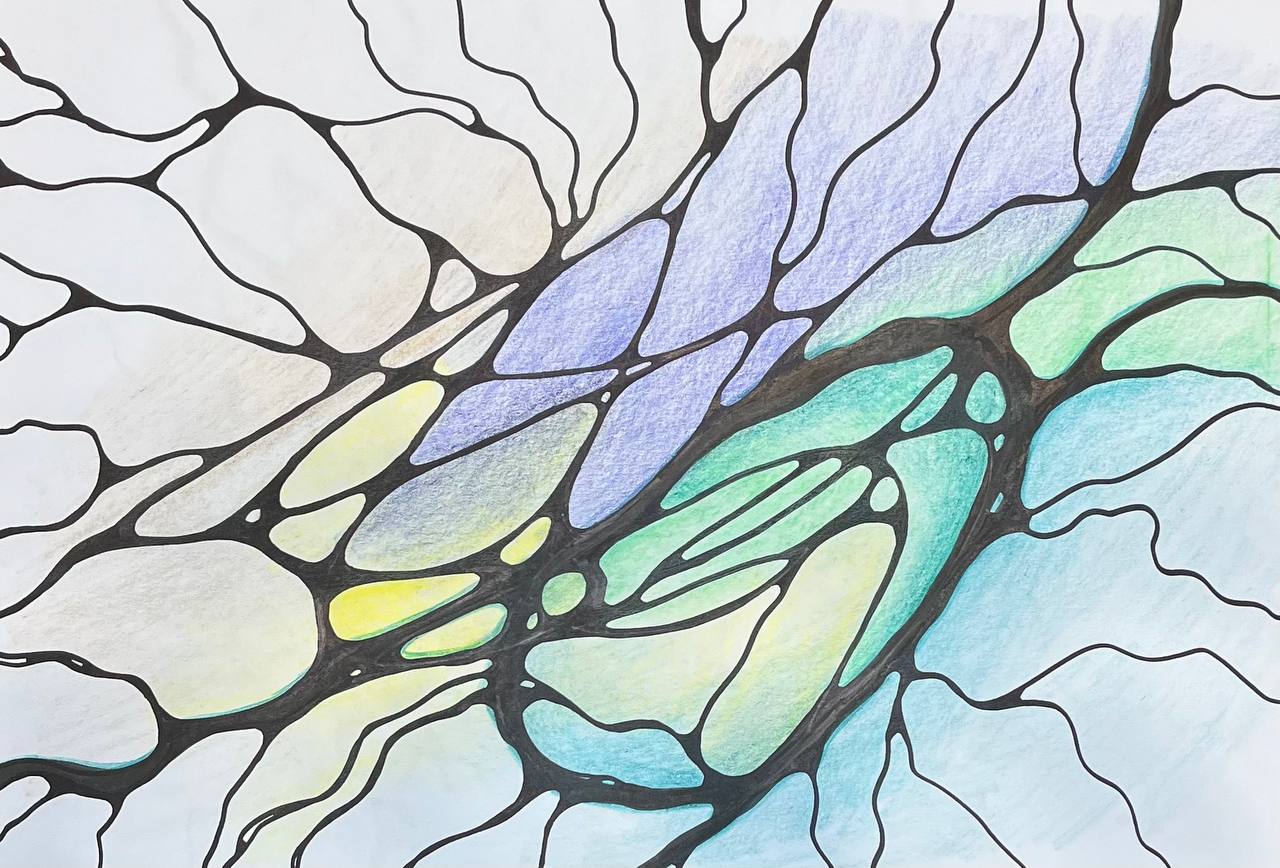
A Mindful Line neurographics drawing
Step 1: Choose the Thought Loop
Start with one specific thought or situation.
For example:
You do not need to explain it perfectly. Just choose the topic that feels most active in your mind.
Step 2: Express the Tension on Paper
After you choose your topic, place your pen or marker on the page and let your hand express the feeling quickly.
For a few seconds, move your hand across the paper without trying to control the result. Let the pressure, worry, confusion, or repetition come out as spontaneous lines or scribbles. Do not try to make it beautiful, balanced, or meaningful.
This step is not about drawing slowly or carefully. It is about taking the thought loop out of your mind and placing its emotional charge onto the paper.
Step 3: Round the Intersections
Look for places where lines cross or create sharp angles.
Round those intersections.
This is one of the most important steps in neurographics. Rounding sharp points helps soften visual tension and gives the brain a new pattern to follow.
As you round the intersections, breathe slowly and allow your attention to stay with the drawing.
Step 4: Add Mindful Lines
Now add more mindful lines to the drawing.
These lines are slower and more intentional than the first emotional release. Let them move across the page naturally, passing through different areas of the drawing and creating more flow.
Add enough mindful lines so the original release no longer stands out as a separate chaotic shape. It should begin to blend into the whole drawing and become part of a larger visual field.
Then round any new intersections that appear.
Step 5: Add Color
Add color intuitively, choosing shades that feel calming, grounding, energizing, or supportive.
As you color, try to fill at least two neighboring sections with the same color, or connect several nearby areas into one larger color field. Avoid coloring isolated shapes that stand completely alone. The goal is to help the drawing feel more connected and integrated, rather than broken into separate pieces.
Step 6: Find Visual Solution
Look at the drawing and notice which shape or area wants to become the main visual solution.
It may be a circle, another clear shape, or even an organic form that does not have a specific name. You do not need to understand it logically or explain what it means.
Once you choose this form, emphasize it clearly with your marker. Make the outline stronger so it becomes the first thing your eye notices when you look at the drawing.
In neurographics, this visual solution gives the brain a new image of resolution. The mind does not always need to explain the solution in words. Sometimes the visual form itself is enough to help the brain move out of the old thought loop and toward a new response.
Step 7: Notice What Has Changed
When the drawing feels finished, pause.
Ask yourself:
The goal is not to force an answer. Often, the shift is subtle: a little more space, a little less pressure, a little more clarity.
When Overthinking Is Connected to Deeper Emotions
Sometimes overthinking is not just a mental habit. It may be connected to grief, fear, unresolved experiences, relationship stress, or a major life transition.
In these cases, guided support can be especially helpful.
A trained instructor can help you follow the neurographics process step by step, stay connected to the drawing, and use the method with more structure. This can be important when the topic feels emotionally charged or difficult to hold alone.
Neurographics is not a replacement for medical care. If overthinking is intense, constant, or connected to depression, professional support may also be important.
How Often Should You Practice?
Many people notice a shift after one neurographics session, especially when they are working with stress, racing thoughts, or emotional tension.
For more stable results, regular practice is helpful. Practicing once or twice a week can help reinforce new neural pathways and support calmer emotional responses over time.
Some people use neurographics whenever they feel mentally overwhelmed. Others make it part of a weekly self-reflection routine.
If you want to practice regularly, the Mindful Line Club offers guided neurographics sessions where participants draw together and build a consistent creative practice over time.
Where to Start With Mindful Line
If you are new to neurographics, the easiest way to begin is with a guided practice.
Mindful Line is an international online neurographics school with more than 1 million students in over 100 countries, teaching structured drawing practices for emotional regulation, stress relief, mindset shifts, and personal transformation.
You can start with a beginner-friendly session, explore a foundational course like Neurographics Essentials, or join the Mindful Line Club for regular guided drawing practice.
Frequently Asked Questions

Can neurographics help stop overthinking?
Neurographics can help interrupt overthinking by shifting attention from repetitive thoughts to structured visual processing. Through drawing, rounding intersections, adding shapes, and integrating the image, the mind engages with the issue in a new way instead of repeating the same internal loop.
Is neurographics better than meditation for overthinking?
Neurographics can be easier for people who struggle to sit still or quiet the mind. Meditation often asks the mind to become still, while neurographics gives the mind and body a gentle activity to focus on.
Do I need drawing skills to use neurographics for overthinking?
No. Neurographics does not require drawing skills. The method uses simple lines, rounded intersections, shapes, and color. The focus is not on artistic ability, but on the inner shift created through the drawing process.
How long does it take to feel calmer?
Some people feel calmer within 20–40 minutes of neurographics practice. Deeper changes usually come with regular repetition, especially when working with long-standing emotional or mental patterns.
Privacy Policy | Terms And Conditions | Neuroart Limited