

Why Do I Keep Repeating the Same Patterns?
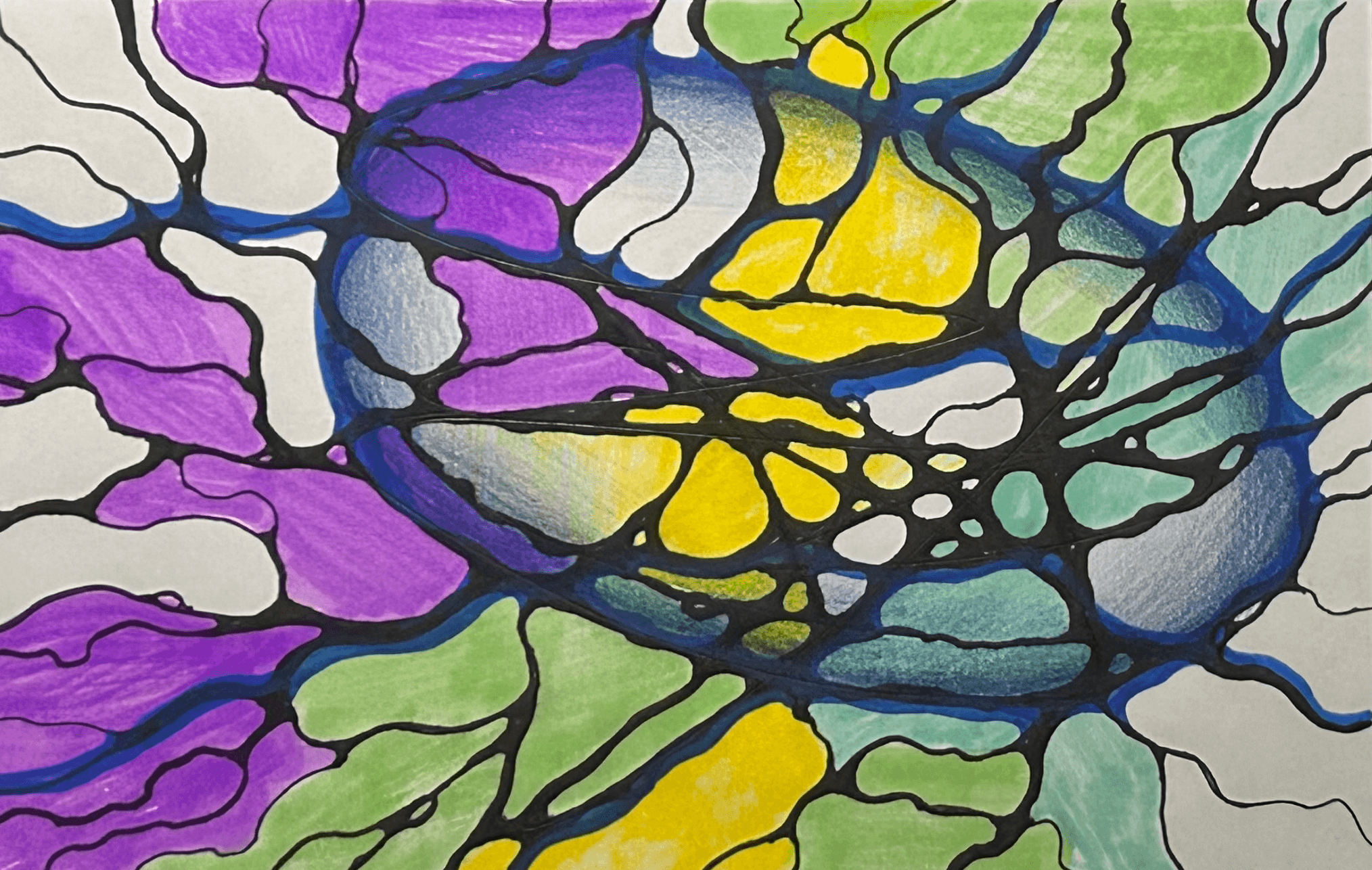
A Mindful Line neurographics drawing
If you keep finding yourself in similar situations — even after promising yourself that this time will be different — you are not alone.
You may choose similar partners, say yes when you want to say no, procrastinate on the same kinds of tasks, avoid difficult conversations, overthink decisions, or return to habits you thought you had already left behind.
So why do we repeat the same patterns?
We often repeat patterns because familiar ways of thinking, feeling, and responding become automatic over time. The mind tends to use what it already knows, especially when we are tired, stressed, uncertain, or emotionally activated. A pattern can continue even when we consciously understand that it is no longer helping us.
Changing a repeating pattern usually takes more than recognizing it. It involves noticing what triggers it, understanding what keeps it going, and creating opportunities to respond differently.
Mindfulness practices can help with this process. Mindful Line offers another approach: a structured drawing method that helps transform emotional and mental patterns and supports the formation of new neural pathways through guided visual practice.
You don't need any artistic skills to practice neurographics. What matters is that you create something you like and enjoy looking at. The drawing becomes a way to slow down, notice your reactions, and explore a different response to something that normally feels automatic.
Why Do I Keep Repeating the Same Patterns?
Repeating patterns are often built gradually.
A response that begins as a conscious choice can become increasingly familiar each time it is repeated. Eventually, we may stop noticing that we are making the same choice at all.
Imagine that someone regularly avoids disagreement because conflict feels uncomfortable. Each time tension appears, they change the subject, stay silent, or agree with the other person.
In the short term, avoiding the conversation may bring relief. Because that relief feels useful, the same response is more likely to happen again.
Over time, a pattern develops:
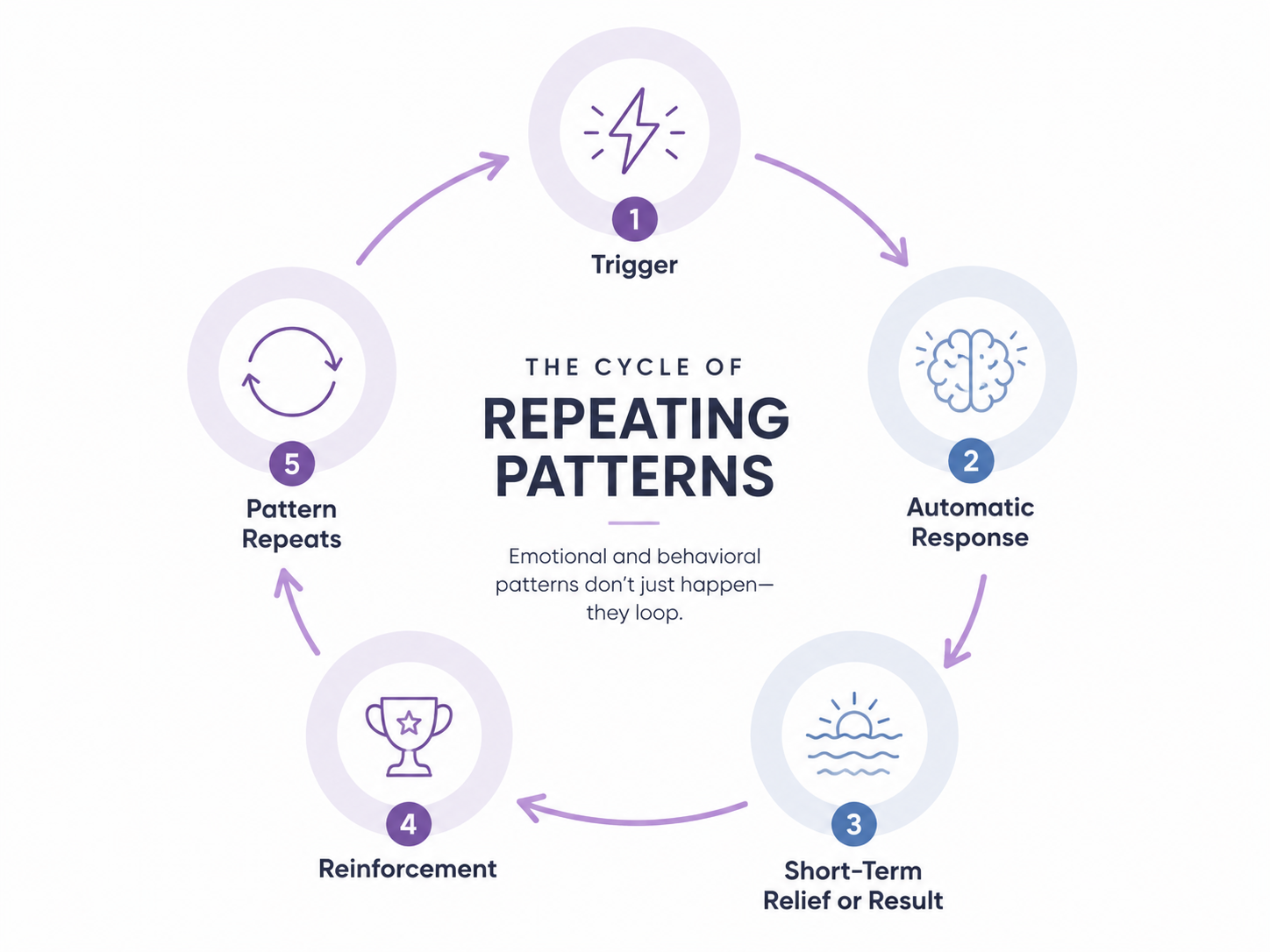
Trigger → familiar reaction → short-term result → reinforcement of the reaction → pattern repeats
The pattern may appear in many different situations while still following the same basic structure.
This is why repeating patterns can sometimes feel mysterious. The people, circumstances, or details change, but your response remains surprisingly similar.
Familiar Responses Require Less Effort
The human brain constantly looks for efficient ways to handle everyday life.
Imagine having to consciously decide how to brush your teeth, open a door, or drive a familiar route every single time. Life would become exhausting.
Automatic patterns make daily life easier.
The difficulty is that emotional and behavioral responses can also become automatic.
You may automatically:
The response can happen quickly, sometimes before you have fully recognized what triggered it.
Familiar Does Not Always Mean Comfortable
One of the confusing things about repeating patterns is that people sometimes return to situations they do not actually enjoy.
Why?
Because familiarity and comfort are not the same thing.
A familiar situation can feel predictable even when it is unpleasant. You already know how to respond to it.
A new response may actually be healthier or more aligned with what you want, but it also contains uncertainty.
For example, setting a boundary may feel less familiar than saying yes.
Asking directly for what you need may feel less familiar than hoping someone notices.
Taking a new opportunity may feel less familiar than remaining in a situation you have outgrown.
In moments of uncertainty, familiar responses can become especially attractive.
Emotions Can Strengthen Patterns
Repeating patterns are rarely purely logical.
They often involve emotion.
Fear, embarrassment, anger, guilt, disappointment, or uncertainty can quickly influence how we respond. When an emotional reaction is strong, the familiar response may appear before we have time to consider alternatives.
This is one reason simply knowing what you "should" do may not be enough.
You can understand intellectually that you need stronger boundaries and still find yourself saying yes.
You can know that one mistake does not define you and still avoid trying something new.
You can recognize that a relationship dynamic is familiar and still feel pulled into it again.
Intellectual understanding is valuable. But awareness alone does not automatically create a new response.
Beliefs Can Quietly Maintain Patterns
Another part of a repeating pattern may be the meaning you give to the situation.
For example:
"If I disappoint someone, they will reject me."
"If I cannot do this perfectly, I should not do it."These beliefs do not necessarily appear as clear sentences in your mind. They may simply feel like reality.
When a belief has been repeated for years, decisions that match it can feel natural.
Recognizing these underlying assumptions can make a pattern easier to understand.
Your Environment Matters Too
Not every repeating pattern comes from your inner world.
Your surroundings also influence behavior.
Certain people, routines, places, schedules, or situations can act as triggers. If the environment repeatedly encourages the same reaction, changing the pattern may be more difficult.
This is important because people often blame themselves for "not having enough willpower" when the environment is continuously reinforcing the behavior they are trying to change.
Understanding the pattern is more useful than judging yourself for having it.
Why Common Advice Doesn't Always Help
When people notice a repeating pattern, they often receive advice such as:
"Just stop doing that."
"Think positively."Sometimes that advice is useful. But often it oversimplifies what is happening.
If the pattern has become automatic, the problem is not necessarily a lack of information.
You may already know exactly what you would like to change.
The challenge is creating enough space between the trigger and your usual reaction to notice that another response is possible.
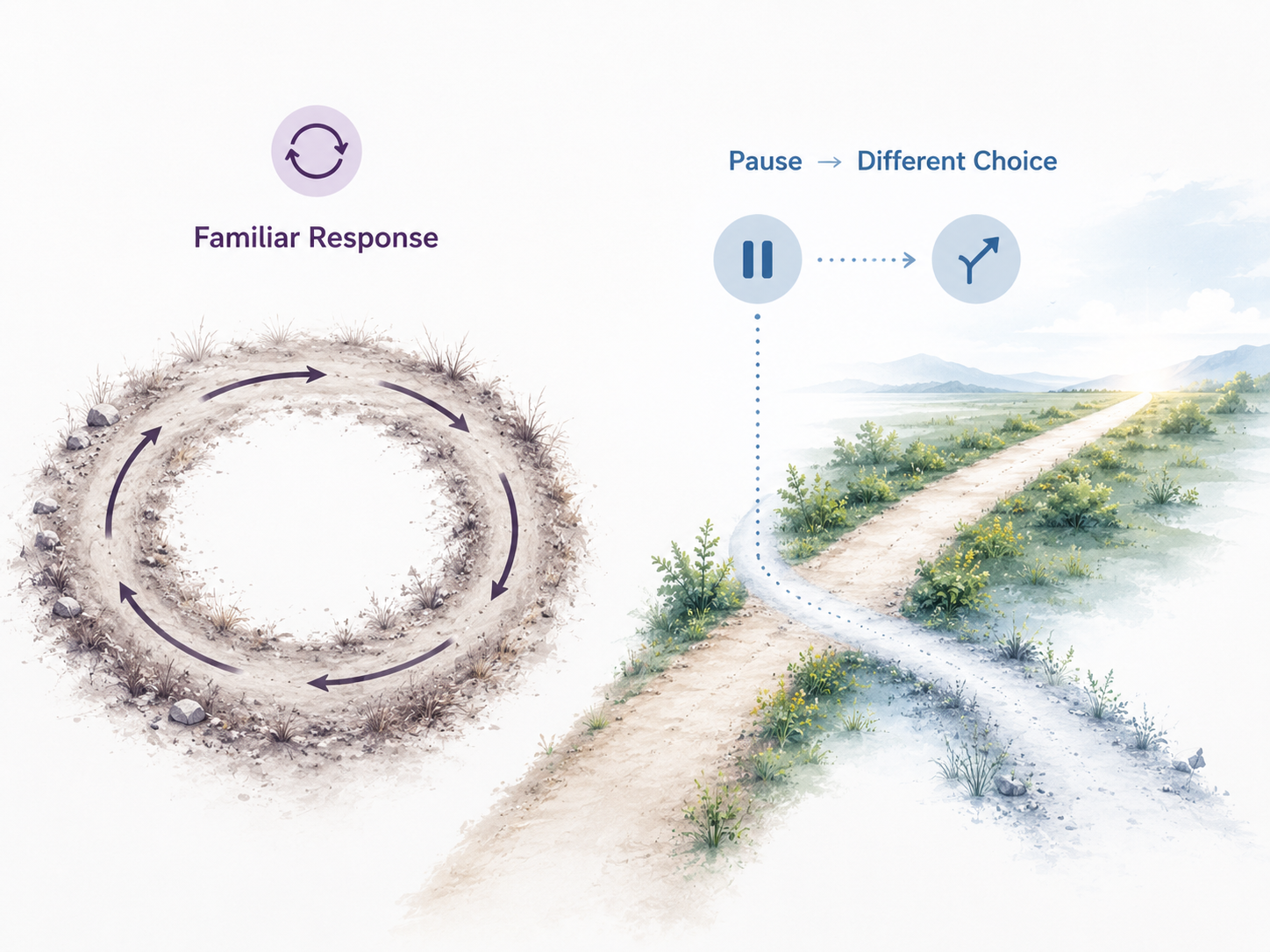
Insight Does Not Automatically Change Behavior
Understanding where a pattern comes from can be meaningful.
You may suddenly realize:
"I always become quiet when someone disagrees with me."
"I overcommit because I hate disappointing people."That insight matters.
But recognizing a pattern and responding differently are two separate processes.
A familiar reaction has often been repeated many times. One moment of insight does not necessarily make that response disappear.
Instead, change usually involves practice.
You notice the pattern.
You catch it a little earlier.
You experiment with another response.
You observe what happens.
Eventually, the alternative may begin to feel more available.
Willpower Has Limits
People sometimes approach change as a test of discipline.
They tell themselves:
"Next time I will be stronger."That may help temporarily, but relying entirely on willpower can be difficult because our ability to make deliberate choices changes depending on the situation.
When you are calm and rested, a new response may feel easy.
During a stressful conversation, however, your familiar reaction may return immediately.
That does not mean the new approach failed. It means the old response is still highly accessible.
Creating change often involves practicing the new response repeatedly rather than expecting yourself to perform it perfectly.
Suppressing a Reaction Is Different From Transforming It
Trying not to think, feel, or react a certain way can sometimes create an additional struggle.
For example:
"I shouldn't be nervous."
"I shouldn't care what people think."Now there are two experiences happening at once: the original reaction and frustration with yourself for having it.
A more useful starting point can be curiosity.
"What exactly happens in me when this situation appears?"
"What do I notice first?"This kind of observation can reveal much more about the pattern than simply telling yourself to stop it.
How Neurographics May Help With Repeating Patterns
Neurographics approaches a pattern differently.
Rather than analyzing it entirely through words, you explore the topic through structured drawing and guided visual practice.
Neurographics is described as a structured drawing method that helps transform emotional and mental patterns and supports the formation of new neural pathways through guided visual practice.
The method does not require artistic ability. You are not trying to draw the problem or create a picture that looks realistic.
Instead, you bring a topic to the page and follow a structured drawing process while observing what happens in your thoughts, emotions, and body.
Drawing Can Slow Down an Automatic Response
Automatic patterns often happen quickly.
A trigger appears, and within moments we are thinking, feeling, or behaving in the familiar way.
Structured drawing creates a slower process.
You make a line.
You notice a reaction.
You make another decision.
You adjust something on the page.
You observe again.
That slower pace can make reactions easier to notice.
Instead of asking only, "Why do I keep doing this?" you begin exploring, "What happens when I stay with this situation instead of immediately responding the way I normally do?"
The Drawing Gives the Pattern a Visual Form
Some experiences are difficult to understand entirely through language.
You may know that a situation bothers you without knowing exactly why.
When you bring the topic into a drawing, different elements can begin to represent parts of your experience.
You might notice that one area feels crowded.
A line may feel difficult to continue.
Two elements may seem disconnected.
A certain part of the drawing may create tension.
The point is not to interpret every mark as a symbol with one fixed meaning. Instead, the drawing gives you something concrete to interact with while you observe your own reactions.
Neurographics Introduces Deliberate Change
A neurographics drawing (aka mindful line drawing) is not simply spontaneous doodling.
It is a guided visual practice.
You make intentional changes according to the method.
That matters because repeating patterns are built around familiar responses. During structured drawing, you repeatedly encounter moments when you can adjust, connect, soften, expand, or continue rather than simply following the first impulse.
The drawing becomes a small environment in which different choices can be explored.
Repetition Matters
One drawing does not magically erase a pattern that developed over many years.
Neurographics is better understood as a practice.
Repeated guided visual practice may help you become more aware of your emotional and mental patterns while strengthening your ability to approach a familiar topic in a new way.
With repetition, new responses may gradually become easier to access.
This is also why the phrase new neural pathways should be understood carefully.
The brain is capable of changing with experience and repetition. Neurographics uses intentional visual activity as part of that process, but it should not be presented as a medical treatment or as a guarantee that a particular psychological pattern will disappear.
A Simple Neurographics Practice for Repeating Patterns
You can begin exploring a repeating pattern with a simple drawing exercise.
This is not intended as therapy or as a substitute for professional support. Think of it as a mindfulness-based visual practice for observing a familiar response from a different perspective.
You will need:
No drawing skills are required.
Step 1: Choose one repeating pattern
Choose something specific.
Instead of:
"I always ruin everything."Try:
"I say yes when I want to say no."Specific topics are easier to explore than broad judgments about yourself.
At the top of another sheet of paper, or mentally, complete this sentence:
The pattern I want to explore is...
Notice your immediate reaction.
Do you feel tension?
Relief?
Resistance?
Curiosity?
You do not need to change anything yet. Simply notice.
Step 2: Draw your first mindful line
Place your marker somewhere on the page.
Begin drawing a line.
Allow it to travel across the paper without trying to make a recognizable image.
Avoid turning it into a decorative pattern. Let the direction change as you draw.
As the line moves, keep the repeating pattern in mind.
Notice whether you want to control the line or predict where it will go.
That reaction itself may be interesting.
This approach to drawing lines is called mindful line, which is how our school got its name.
Step 3: Add more lines
Continue adding lines until different parts of the page begin to interact.
Some lines may intersect.
Some areas may feel open.
Others may feel crowded.
Do not worry about creating something attractive.
The page is simply giving you a visual space in which to explore the topic.
Periodically ask yourself:
"What am I noticing right now?"
You may observe a thought, emotion, body sensation, memory, or impulse.
There is no correct answer.
Step 4: Notice the intersections
Look at places where lines cross.
In neurographics, intersections are intentionally rounded rather than left as sharp crossings.
Begin softening these intersections with your marker.
Take your time.
While rounding, notice whether your internal reaction changes.
Sometimes people become impatient.
Sometimes they relax.
Sometimes a new thought appears.
Sometimes nothing noticeable happens.
All of these responses are acceptable.
The purpose is not to force an emotional experience. It is to stay attentive while engaging in the structured drawing process.
Step 5: Explore a different possibility
Return mentally to your original pattern.
Ask:
What would I like to be possible instead?If your pattern was:
"I say yes when I want to say no,"you might explore:
"I can pause before answering.If it was:
"I abandon things when they become difficult,"
you might choose:
"I can stay with uncertainty a little longer."
Try to choose something believable rather than a dramatic opposite.
Then continue the drawing while holding this new possibility in mind.
Add lines.
Create connections.
Round new intersections.
Allow the drawing to develop.
You are not trying to force the page to represent the new response literally. You are practicing staying connected to a different possibility while continuing a structured activity.
Step 6: Add color
Choose colors intuitively and add them to at least two connected areas of the drawing.
Notice where you naturally want to add color and where you do not.
Again, avoid searching for a universal meaning such as "blue always means this" or "red always means that."
Your personal response to the drawing matters more than a fixed interpretation.
Step 7: Reflect
When the drawing feels complete, spend a few minutes looking at it.
Ask yourself:
You may want to write down a few sentences.
Then identify one small action you can experiment with the next time the familiar pattern appears.
For example:
"I will wait ten minutes before saying yes."The goal is not immediate perfection.
The goal is becoming more aware of the moment in which the pattern begins.
For a fuller introduction to the method, read How to Draw Neurographics Step by Step.
Where to Start With Mindful Line
If you are new to neurographics, the easiest way to begin is with a guided practice.
Mindful Line is an international online platform with more than 1 million students in over 100 countries, teaching structured drawing practices for emotional regulation, stress relief, mindset shifts, and personal transformation.
You can start with a beginner-friendly free session, explore a foundational course like Neurographics Essentials, or join the Mindful Line Club for regular guided drawing practice.
Frequently Asked Questions

Why do I keep repeating the same mistakes even when I know better?
Knowing something intellectually does not automatically change an automatic response. Repeating patterns are often connected to familiar habits, emotional reactions, beliefs, and environmental triggers. The old response may appear before you consciously consider alternatives.
Instead of asking only why you made the same mistake again, try identifying the moment when the pattern begins. The earlier you can notice it, the more opportunity you have to experiment with another response.
Why do I keep attracting the same kind of people?
It can feel as though you are "attracting" the same person repeatedly, but often what repeats is a familiar relationship dynamic.
You may feel comfortable with certain communication styles, tolerate familiar behaviors longer, respond predictably to particular personalities, or overlook early signs because the interaction feels recognizable.
Looking at your own repeating role in the dynamic can be more useful than assuming that the same people simply keep appearing by chance.
Can childhood experiences create repeating patterns?
Earlier experiences can influence expectations, beliefs, boundaries, and ways of responding to other people. However, not every repeating pattern needs to be traced to childhood.
Current habits, environments, relationships, expectations, and repeated choices can also maintain patterns.
If a pattern involves significant distress, trauma, abuse, or overwhelming emotional reactions, consider discussing it with a qualified mental health professional.
Can I change a pattern I have had for decades?
Long-standing patterns can change, although they may require patience and repetition.
The goal is not necessarily to make the old reaction disappear immediately. A more realistic progression is noticing the pattern sooner, creating a pause, experimenting with a different response, and repeating that response enough times for it to become more familiar.
For people interested in exploring patterns visually, neurographics can be used as a structured mindfulness practice alongside other forms of reflection.
How long does it take to change a repeating pattern?
There is no universal timeline.
Some patterns shift relatively quickly once the trigger becomes clear. Others have been reinforced for many years and require more practice.
The complexity of the situation, your environment, the frequency of the trigger, and the kind of pattern involved can all affect the process.
Rather than focusing only on whether the pattern has disappeared, look for smaller changes: noticing it earlier, recovering faster, pausing before reacting, or choosing differently more often.
What is neurographics?
Neurographics is a structured drawing method that helps transform emotional and mental patterns and supports the formation of new neural pathways through guided visual practice.
The method combines intentional drawing with observation and reflection. Artistic talent is not required.
If you are new to the practice, read What Is Neurographics and How Does It Work?
Can neurographics help change habits?
Neurographics may support the process of exploring habits by helping you slow down, observe automatic reactions, and practice approaching a familiar topic differently through structured drawing.
It should not be viewed as a guaranteed method for changing behavior or as a substitute for medical or psychological care.
Its value lies in the combination of attention, repetition, visual activity, and reflection.
For practical instructions, read How to Draw Neurographics Step by Step.
Is Neurographics the same as art therapy?
No.
Both approaches can involve drawing, but they are not interchangeable.
Neurographics is a structured drawing practice with its own visual principles and process. Art therapy is a professional mental health discipline practiced by appropriately trained professionals.
For a detailed explanation, read Neurographics vs Art Therapy.
Final Thoughts
Repeating the same pattern does not necessarily mean you lack discipline or self-awareness.
Often, it means a particular response has become familiar.
The first meaningful change is usually not eliminating the pattern. It is recognizing it while it is happening.
You begin to notice the trigger.
Then the familiar reaction.
Then the moment when another response might be possible.
Structured practices can make that moment easier to see.
Neurographics offers one way to explore this process through structured drawing and guided visual practice. By bringing attention to emotional and mental patterns and repeatedly experimenting with something different on the page, you may gradually create more space between an automatic reaction and a conscious choice.
If you would like to explore the method further, Mindful Line teaches neurographics to students around the world through guided drawing practices designed for beginners as well as more experienced practitioners. No art background is required.
The purpose is not to draw perfectly.
It is to become curious about what becomes possible when you stop following the familiar path automatically.
Privacy Policy | Terms And Conditions | Neuroart Limited